INTRODUCTION
It is estimated that probably 90% of American martial artists know little about
there style and, other than the physical aspects, most of those martial artists
seem content merely to practice karate, with little interest in studying the origins
of their art. Those of us in Okinawa Shorin Ryu Matsumura Seito Karate and Kobudo
Association are of different mentality. While we enjoy the physical aspects of Shorin-ryu,
we also have a burning desire to learn the history and the origins of our art.
Generations of secrecy have shed a veil of mystery around the history and origin of
Okinawan karate. To a certain degree, this veil of secrecy still exists. This, coupled
with the general lack of written records, has created the lack of information on the early
years of Ryukyu martial arts. What little information we may have has come to us by
scattered bits and pieces that somehow have come into the possession of modern karate
historians or from those of you who were fortunate enough to have been told some of the
history from an Okinawan sensei. Nevertheless, any attempt to write on karate
"history" will leave many stones unturned, and the following attempt is no
exception. A lot of questions are left unanswered, perhaps one day we will know more.
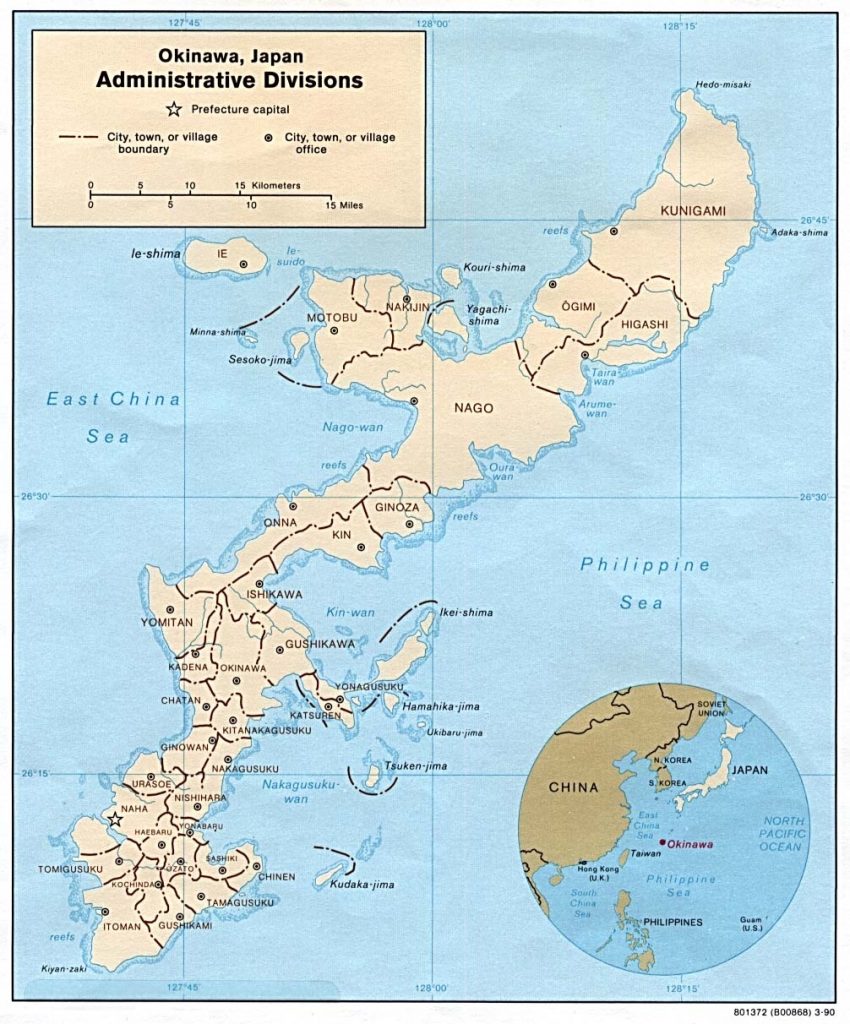
EARLY HISTORY OF OKINAWA KARATE
Early Okinawan karate, or tode ("China Hand") as it was called, owes its
origin to a mixture of indigenous Okinawan fighting arts and various "foot
fighting" systems and empty-hand systems of Southeast Asia and China. Being
seafaring people, the Okinawans were in almost constant contact with mainland Asia.
It is quite likely that Okinawan seamen visiting foreign ports were impressed with
local fighting techniques and incorporated these into their own fighting methods.
Interest in unarmed fighting arts increased during the 14th century when Chuzan King
Sho Hashi established his rule over Okinawa and banned all weapons. A more rapid
development of tode followed in 1609 when the Satsuma clan of Kyushu, Japan, occupied
Okinawa and again banned the possession of weapons. Thus tode or Okinawa-te, as the
Satsuma samurai soon called it, became the only means of protection left to the Okinawans.
It was this atmosphere that honed the early karate-like arts of Okinawa into a weapon,
enabling the island people to conduct a guerrilla-type war with the Japanese samurai
that lasted into the late 1800's.
So tode or Okinawa-te was developed secretly, thus preventing the Japanese from killing
the deadly art's practitioners and teachers. Tode remained underground until the early
1900's, when it was brought into the Okinawan school system's physical education program.
DEVELOPMENT OF KARATE-DO STYLES AND SYSTEMS
Chatan Yara was an early Okinawan master of whom some information exists. Some
authorities place his birth at about 1670, in the village of Chatan, Okinawa;
others place his birth at a much later date. In any case, he contributed much to
Okinawa karate. He reportedly studied in China for 20 years. His bo and sai techniques
greatly influenced Okinawan kobudo, his Kata, "CHATAN YARA NO SAI," "CHATAN
YARA SHO NO TONFA," and "CHATAN YARA NO KON" are widely practiced today.
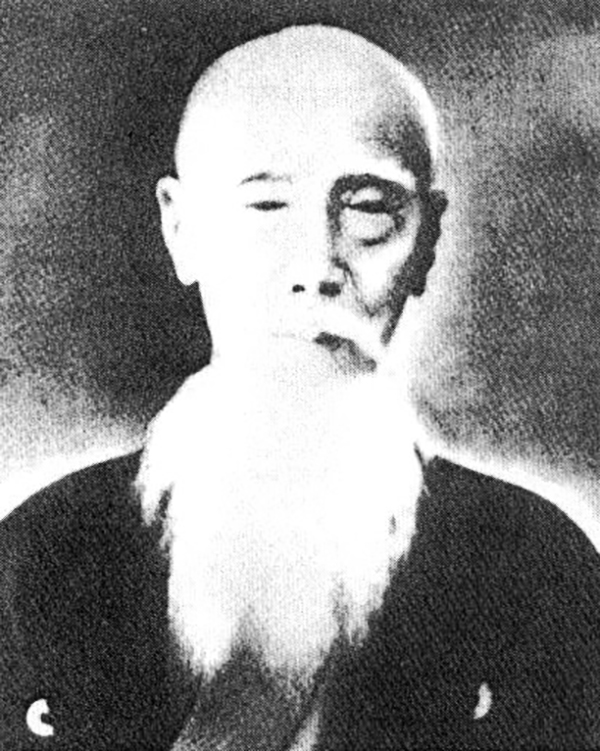
Satunuku "Tode" Sakugawa
(1733-1857)
|
Most modern karate styles can be traced to the famous Satunuku Sakugawa (1733-1857)
called "Tode" Sakugawa. Sakugawa first studied under Takabara Peichin of
Shuri. Later, Sakugawa went to China to train under the famous Kusanku. Kusanku had been
a military attache in Okinawa. When Master Kusanku returned to China, Sakugawa followed
and remained in China for six years. In 1762, he returned to Okinawa and introduced his
kempo ("fist way"). This resulted in the karate we know today. Sakugawa became
a famous samurai and was given the title of Satunuky or Satonushi, titles given to Okinawan
warriors for service to the Okinawan King. Sakugawa had many famous students; among
them were:
- MATSUMURA CHIKATOSINUMJO SOKON
- MAKABE SATUNUKU
- UKUDA SATUNUKU
- MATSUMOTO CHIKUNTONOSHINUNJO
- KOJO OF KUMEMURA
- YAMAGUCHI OF THE EAST (BUSHI SAKUMOTO)
- USUME OF ANDAYS
Sakugawa contributed greatly to Okinawan karate. We honor him today by continuing
many of the concepts he introduced. Sakugawa's greatest contribution was in teaching
the great "Bushi" Matsumura Sokon.
More History
Okinawa, the birth place of karate ,has produced many versions or individual styles of
its bare-handed fighting art. Some styles evolved from the teachings of different masters,
other styles are indicative of a particular town, or villager family tradition handed down
from one generation to another. However in terms of the main stream of historical
development of karate, there are really only two styles. One style is known as
Shuri-Te(Shuri hands) and the other is Naha-Te(Naha hands).
Naha-Te was developed around the principal port city of Naha, a large trade center. This
method of Te (empty hand fighting) was perpetuated by Bushi (warrior) Sakiyama (b.1819),
Arakaki Kamadeunchu (1840-1920) and Kanryo Higashionna (1851-1915). Naha-Te ultimately
became known as Shorei Ryu (inspirational style) and evolved into the Goju Ryu and Uechi
Ryu styles of modern karate. The use of soft circlular blocks in Goju and Uechi Ryu make
them similar although Uechi Ryu Shows a much stronger Chinese influence.
Shuri-Te, on the other hand, was a style that developed mainly in the ancient city of
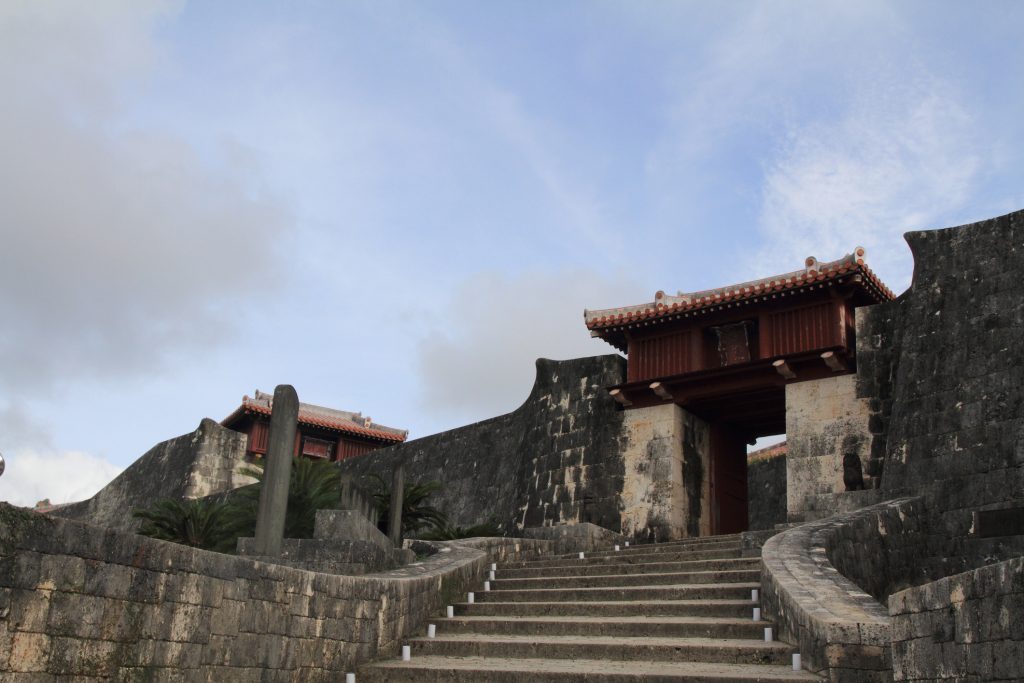
Shuri, the ancient capital of Okinawa. This is where the king and members of the
nobility lived. Actually another style known as Tomari-Tewas a closely related system
and was considered to be an off shoot of Shuri-Te. Tomari-Te was practiced in Tomari
Village. This village was located close to Shuri and was populated mostly by farmers
and fishermen. Tomari-Te eventually blended back into Shuri-Te. Ultimately Shuri-Te
developed into Shorin Ryu (Young Forest Style). Of the two styles of Okinawan Karate,
it should be noted that the Shuri-Te system is characterized by speedy movements rather
than the more forceful movements of the Naha-Te system. Shuri-Te was a more offensive
style while Naha-Te was a more defensive one. The differences of style are really only
surface differences as both styles are derived from similar Chinese martial traditions.
Naha-Te seems to have more of the soft-techniques and emphasis on breathing and control
of Ki (intrinsic energy) influenced by Taoist philosophy. While Shuri-Te appears to be
derived from the Shaolin Kenpo Style. The Shuri-Te style was practiced by the samurai of
the court at Shuri Castle. The original Shuri-Te and its evolved counterpart Shorin Ryu
traces its history back over two hundred years in Okinawa.
Shinjo Choken is a "Dai Jo" or an important figure in Shorin Ryu's history. He is one of
the earliest known practitioners of Shuri-Te. He was active in the late 1600's and early
1700's. It has been handed down that after Shinjo Choken another martial artist by the
name of Tode Sakugawa (1733-1815) became prominent in Okinawa. In fact, he is considered
to be the first true teacher of Okinawan Karate. Sakugawa's martial art was a mixture of
Shuri-Te and Chinese Kenpo. In 1756, Sakugawa became a student of the Chinese military
envoy Kusanku (also Kushanku). Kusanku was a highly skilled Kenpo master and famous for
his fighting ability. Kusanku did many things which influenced Shuri-Te's and ultimately
Shorin-Ryu's development. He taught many native Okinawans including Chatan Yara and Shionja
of Shuri. He brought some of his students from China to Okinawa and they spread the Chinese
style on Okinawa. In addition, it is reported that Kusanku introduced a maneuver whereby
the closed fist was held in a chambered or ready position along the side of the torso
(hikite)and then from this position a punch was thrown, corkscrewing it in karate fashion,
toward the intended target. Kusanku is also credited with the introduction of a type of
kumite or sparring to Okinawan karate. This kumite was referred to as Kumiai Jutsu or
fighting technique.
After his training with Kusanku, Sakugawa became known as an expert in the Chinese style
of fighting called Tode. This is the basis for his nickname Tode (Chinese hand)
Sakugawa. He is credited with being the first Okinawan Karate teacher. The reasoning
behind this is that Sakugawa is said to have combined the techniques of Chinese style
Kenpo (Tode) with the native Okinawan techniques of Shuri-Te and thereby formed the
basis of a truly Okinawan Karate. He has three students who distinguished themselves
as excellent martial artists. They were Bushi Ukuda, Macabe Chokun and Bushi Matsumoto
of Urazoe. However his last and most famous student was Bushi Matsumura
(1797-1889).
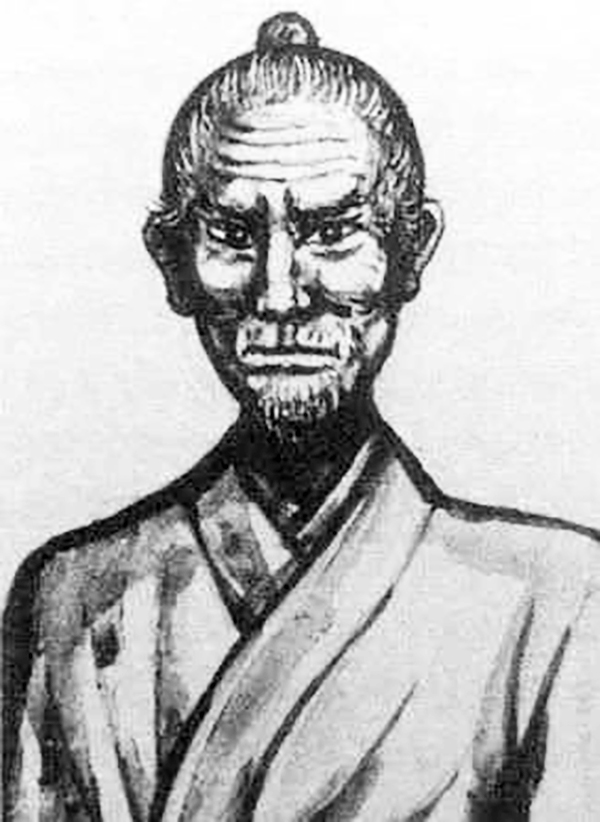
BUSHI MATSUMURA
Bushi Matsumura
(1797-1889)
|
Sokon Matsumura, also known as Bushi (Warrior) Matsumura and Shuri Matsumura (1797-1889),
was one of the most renowned martial artists of his time. He was known as a master "par
excellence" and the organizer and founder of Shorin Ryu Karate. Matsumura is responsible
for carrying on the teachings of the old Shuri-Te martial arts. Matsumura chose the name
Shorin Ryu (Shaolin Ssuin Chinese) as the name of his Ryu because it is related back to
the Shaolin Temple in China, renowned for its fighters. Although some authorities believe
that Anko Itosu (1830-1915), Matsumura's student, is actually responsible for adopting
the name Shorin Ryu.
Matsumura was recruited into the service of the Sho family (Royal family of Okinawa) and
eventually became the chief martial arts instructor and bodyguard for the Okinawan
King. At some point in his career, approximately 1830, he went to China and studied
the Shaolin style of Chinese Kenpo (fist method) and weaponry. It is also known that
he traveled to Foochow in Fukien province, China on numerous occasions as an envoy
for the Okinawan King. After his return from China he organized and refined the Shorin
Ryu system of Okinawan Karate. Matsumura is credited with passing on the kata or formal
exercises of Shorin Ryu Karate known as Naihanchi I & II, Passai Dai (Matsumura no Passai),
Seisan, Chinto, Gojushiho (fifty-four steps of the Black Tiger), Kusanku (the embodiment
of Kusanku's teaching as passed on to TodeSakugawa) and Hakutsuru (white crane). The
Hakutsuru kata contains the elements of the white crane system taught within the Shaolin
system of Chinese Kenpo. Another set of kata, known as Chanan in Matsumura's time, is
said to have been devised by Matsumura himself and was the basis for Pinan I and II.
Matsumura's Ryu has endured to the present day and the above mentioned kata are the core
of Shorin Ryu Karate today. Matsumura was given the title "Bushi" meaning warrior by
the Okinawan King in recognition of his abilities and accomplishments in the martial
arts. In fact, Matsumura fought many times but was never defeated. His martial arts
endeavors, specifically the organization of Okinawan Shorin Ryu system has been the
progenitor of many contemporary karate styles, Shotokan Ryu and Shito Ryu, for example.
Ultimately all modern styles of karate that evolved from the Shuri-Te lineage can be
traced back to the teachings of Bushi Matsumura. This includes Tae kwon Do (Korean
Karate). Tae kwon Do was founded in 1955 by General Choi Hung Hi, a member of the Korean
Army. According to General Hi, "Tae kwon Do is a synthesis of Taekyon, an ancient Korean
form of unarmed combat which mainly employs kicking and karate, a Japanese martial art
which chiefly relies on hand techniques". General Hi, the father of Tae kwon Do, studied
Shotokan Karate in Kyoto while he was a college student in Japan.
Bushi Matsumura before his death passed on his menkyo kaiden (certificate of full
proficiency) to his grandson, Nabe Matsumura.
Shorin-ryu is the Japanese pronunciation of the Chinese characters pronounced
"Shaolin" in Mandarin-Chinese. Shorin/Shaolin means "small forest";
"ryu" simply means "methods handed own," "methods of learning"
such as those of a school, or "tradition."
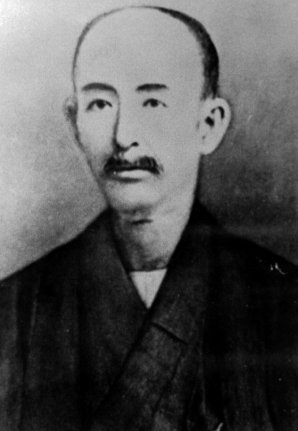
NABE MATSUMURA
Nabi Matsumura
(1860-1930)
|
NABE MATSUMURA brought the old Shorin-ryu secrets into the modern age.
His name does not appear in many karate lineage charts According to Hohan Soken (1889-1982), the purest
teaching of Matsumura's Shorin Ryu was carried on by Matsumura Nabi(c.1860-1930). He received training in
the family style of Matsumura Shorin Ryu which also included the secret techniques of the white crane. The
white crane system was reputed to be a secret family style that was only taught to immediate family members.
In his later years, Nabe Matsumura was referred to as Nabe Tanme or "old man" Nabe. He was known to be a stern
and disciplined teacher. He had only one student, Hohan Soken. It is said he was one of the top karate men of
his time. He passed on his menkyo kaiden to his nephew, SOKEN HOHAN
SOKEN HOHAN
Hohan Soke
(1889-1982)
|
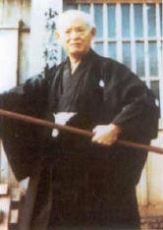
The next successor in the lineage of Matsumura Shorin Ryu was Hohan Soken(1889-1982).
He began training at age thirteen under his uncle, Nabe Matsumura. Soken had to work
in the fields as a youth in spite of his Samurai heritage. This was due to a political
reorganization in the Ryukyu Islands and all of Japan as a result of the Meiji restoration.
After ten years of basic training under Nabe Matsumura, Soken began learning the
techniques of the white crane or Hakutsuru. This was in 1912 when he was twenty-three
years old. According to Soken, this was a secret technique or training methodology which
was confined to the Matsumura family. Bushi Matsumura had learned the white crane system
in China. Soken's instruction in the white crane technique emphasized balance training.
One training method that he practiced was to perform the Hakutsuru kata on a board floating
in a pond. The board was just large enough to support his weight. The Hakutsuru kata, which
was erroneously referred to as the "White Swan" technique in a 1967 magazine article is
the advanced level of Matsumura Shorin Ryu. The Hakutsuru technique is the main part of
the style. It manifests the Chinese concept of the soft (defensive) fist and balance
training while imitating the delicate movements of the white crane. In fact, this concept
is inherent and woven throughout all the kata of Matsumura Shorin Ryu. For example,
Chinto uses the one legged stance of the crane extensively, Gojushiho uses the movements
of the neck and beak of the crane in its technique and Hakutsuru uses the wing (hane) of
the crane. Master Soken also trained for a while with Kenwa Mabuni (1889-1953) and Gokenki,
a Chinese tea merchant living in Okinawa. Gokenki, Soken, Mabuni and several other
Okinawans all trained together as a group. Gokenki's style was Hakutsuru Kenpo (white
crane fist style) and he was from the Fukien coast of China.
Up until the 1950's Master Soken referred to his martial art as Matsumura Shuri-Te,
then he began calling his style Matsumura Seito(orthodox) Shorin Ryu. The empty hand
kata of the style included those passed on by Bushi Matsumura (as previously noted).
However, Master Soken later added to his system's repertoire Rohai 1, 2 & 3. Rohai
means vision of a crane and was originally a Tomari-Te kata dating back to the 1600's.
Hohan Soken was a highly respected master in Okinawa.
He helped pass on the legacy of Matsumura Shorin Ryu. Perhaps his life is reflected
best in his own words - his death poem:
"I have taught you all I know. There is no more I can teach you. I am a candle
whose light has traveled far. You are my candles to whom I have passed on my light.
It is you who will light the path for others. Today I see around me the lights of
Shaolin. The flame of tomorrow. My task is done, soon my flame will end. Teach the
true spirit of karate-do and one day you may enter the Temple of Shaolin".
Hohan Soken's light was most certainly passed on to a candle to help light the way
for others. Hohan Soken gave his Menkyo Kaiden to Fusei Kise prior to his death.
The legacy of Matsumura Shorin Ryu continues with
MASTER KISE FUSEI.
KISE FUSEI
Fuse Kise
(1935 - )
|
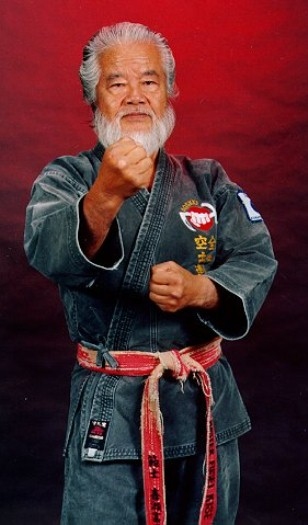
KISE FUSEI was born on May 4, 1935. He began his
study of karate in 1947 under his uncle, Master Makabe. In 1955, Master Kise
became a student to Master Shingake Nobutake and received his shodan. In 1958, Master Kise
began studying under Grandmaster Soken Hohan, the third successor of Matsumura Seito
Shorin-Ryu karate-do. In 1960, he was a student of Grandmaster Nakamura Shigeru, founder
of the Okinawan Kenpo Karate-Do Federation, and qualified for his 7th degree black belt.
After five years of training, Master Kise became a shihan ("master")on January
1, 1965, when he passed the 7th dan examination under Grandmaster Nakamura. At that
time, Master Kise taught and practiced Shorinji-ryu karate-do. During this time, he
continued studying Shorin-ryu under Grandmaster Soken. On January 1, 1957, Master Kise
switched completely over to Matsumura Seito Shorin-ryu. On January 3, 1972, Master Kise
qualified for the hanshi title by passing the 8th dan examination held by Grandmaster
Soken and Master Makabe. Sep 1st 1976 Master Kise qualified for his 9th Dan by
Grand Master Hohan Soken. In 1977 Master Kise founded the Shorin Ryu Karate Kenshin Kan
Karate and Kobudo Federation. On Oct 25 1987 Master Kise was promoted to 10th Dan by
Master Shigaru Tamaiya.
In 2001 the Government of Japan gave there Seal of Approval to the accuracy of Master
Kise's book. They have stated that he (Grand Master Kise ) is the sole true heir to
Matsumora Orthodox Karate, being passed down to him from Hohan Sensei. This has been
entered into the official Government Archives. This means there can be no more disputing
the Lineage of Matsumora Orthodox Karate. It belongs to our Grand Master Kise.
In April of 2001 Grand Master Kise was selected by the Japanese Parliament to receive
a prestigious Lifetime Achievement award. He met with senators, other dignitaries and
with the other Karate Grand Masters who are received awards (4 or 5 other Grand Masters
from Okinawa) at a luncheon in Naha.
Kaicho Isao Kise
Isao Kise
(1957 - )
|
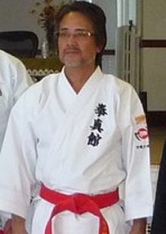
Kaicho (President) Isao Kise is the President of the All Okinawan Shorin Ryu Kenshin
Kan Karate and Kobudo Federation. Kaicho Isao teaches at the Main Dojo, Okinawa City,
Okinawa Japan, military bases on Okinawa and has his on Dojo in Okinawa City. Kaicho
is the All Okinawan Kata, Kobudo, and Kumite Grand Champion.
Kaicho teaches Traditional Karate, Sport Karate, Sport Kumite as well as full
contact Karate. He is a senior judge for tournaments throughout the Island of
Okinawa. Kaicho has been training since the age of 4 and was born July 27, 1957.
Kaicho believes in hard demanding workouts and trains his students to be champions.
Kaicho was promoted to the rank of Hachi Dan (8th Dan) on January 18th 1998.